

5 Signs a Tree Needs To Be Removed
Bob and Ben - The Tree Men
Do you have a tree in your yard that you are concerned about? While trees provide many benefits, they can also become hazardous if not taken care of properly.
Without a doubt, trees are wonderful additions to our landscapes as they provide beauty, shade, and even protection during storms. However, as they age or sustain damage, they can become a danger to both people and property.
Before you decide to remove a tree from your yard, it is important to take note of certain signs that indicate the need for tree removal. In this blog, we will look at the top 5 signs that a tree needs to be removed. If your tree exhibits any of these signs, then it's time to address the issue promptly and take necessary action before it becomes a hazard.
How do you tell if a tree needs to be removed?
Determining whether a tree needs to be removed involves careful observation and assessment. Here are 5 signs that may indicate it's time for a tree removal:
1. The tree is dead or dying
Dead Tree
Dead branches in trees often occur due to damage to the root zone. When the soil becomes saturated, compacted, or there are high levels of salts present in the soil, unhealthy trees can start to weaken and eventually die, leaving behind a hazardous structure if left unaddressed.
When a dying tree shows its tell tale signs, you will notice obvious symptoms such as the bark falling off, no leaves or buds appearing in the springtime, and stunted growth. Extensive areas of missing or peeling bark, known as cankers, may also indicate that a tree is severely stressed or in decline. If you are unsure whether a branch is dead, a simple scratch test can help — scrape back a small section of the outer bark and check the layer underneath: if the tissue is brown and dry rather than green and moist, that branch is dead.
While these signs must be taken seriously, the dead tree poses a great risk to everyone in the area and should never be left standing longer than necessary. Beyond the structural danger, fungi growing on the surface of a dead tree can accelerate deterioration, and the tree can also become a nesting place for pests like mosquitoes, beetles, and wasps, creating additional hazards for your household. As much as it may be difficult to face, dead trees should be removed immediately as they can become unstable and dangerous over time.
Dead Branches
Dead branches may also be present on an otherwise living tree and can easily break and cause injury or property damage. To address this, make sure to call trusted tree removal services who can help you assess the tree and determine whether full removal or branch management is the right course of action.
2. The tree shows signs of disease or infestation
Signs of Disease
One of the major indicators of a diseased tree is when it shows signs of internal decay. When a tree starts to decompose, fungi and bacteria break down the tree's tissues, making it more fragile and susceptible to fungal diseases and further decay. Moreover, the decay can be accelerated by environmental factors such as excessive moisture or physical damage. Consistent tree care and early intervention are the best ways to prevent disease from taking hold.
If you notice any discolouration on the leaves, wilting, spotting, premature leaf drop, or dead branch stubs, these are telltale signs of a diseased tree. Other signs to watch for include misshapen or distorted leaves, which can result from herbicide exposure in the surrounding area and are sometimes mistaken for disease.
Diseased trees may not only pose an inherent risk due to their weakened structure but they can also spread infection to other nearby trees. When this happens, other healthy trees may be affected and the entire area could become a breeding ground for fungi and bacteria.
Signs of Infestation
Like diseased trees, infested trees are highly destructive and can cause significant damage to your property over time. Certain pests and insects like borers, beetles, and termites inflict severe structural damage, while others attack the tree’s foliage and sapwood.
To identify if a tree is infested, consider looking out for signs such as holes in the bark, wilting leaves or branches, discoloured patches on the trunk, lifting roots, black sooty mold, and premature leaf drop. In some cases, you may even see sawdust or sap exuding from the tree. As soon as you spot any of these signs, call a certified arborist for a tree risk assessment and so they can determine the appropriate course of action.
3. The tree has structural issues
Hollow Trunks & Stem Failure
If a tree has significant structural problems, such as multiple trunks, vertical cracks, or a noticeable lean, it may pose a risk of falling. Examining the tree trunk carefully is essential — hollow trunks are a particularly serious concern.
A hollow trunk is a strong indicator of internal decay and compromised structural integrity that may make removal necessary. Issues like stem failure, where the main structure of the tree gives way entirely, can occur without warning and cause significant harm to surrounding property and people. Large branches from large trees that have compromised structural integrity may not only cause damage to buildings and vehicles, but they can also be a safety hazard for pedestrians as well as nearby homeowners.
Weak Limbs & Branch Shedding
When assessing trees for structural problems, it's important to examine the tree's trunk closely for any signs of damage, as well as the strength of its limbs and branches. Even if the tree appears structurally sound, weakly attached or dead branches can easily break and fall off unexpectedly, leading to potential property damage and even injury. A tree that frequently sheds branches, even outside of storm events, may also be a sign that it can no longer adequately support its own weight and should be assessed by certified arborists without delay.
4. The tree has experienced storm damage
Storm Damage & Root Failure
Trees are generally strong and resilient against wind and other weather conditions. However, high winds, lightning strikes, and severe storm events can inflict severe damage that leaves a tree structurally compromised. If a tree has suffered storm damage, it may be more prone to a complete blow over, leaning, or having its branches break off. In addition, a leaning tree may also indicate that root failure or root damage has occurred due to soil erosion, weakening the tree's foundation. Thus, it might be necessary to remove the entire tree before it becomes a danger. Over time, it may also become harder to remove the root system, particularly if it has already grown deep into the ground.
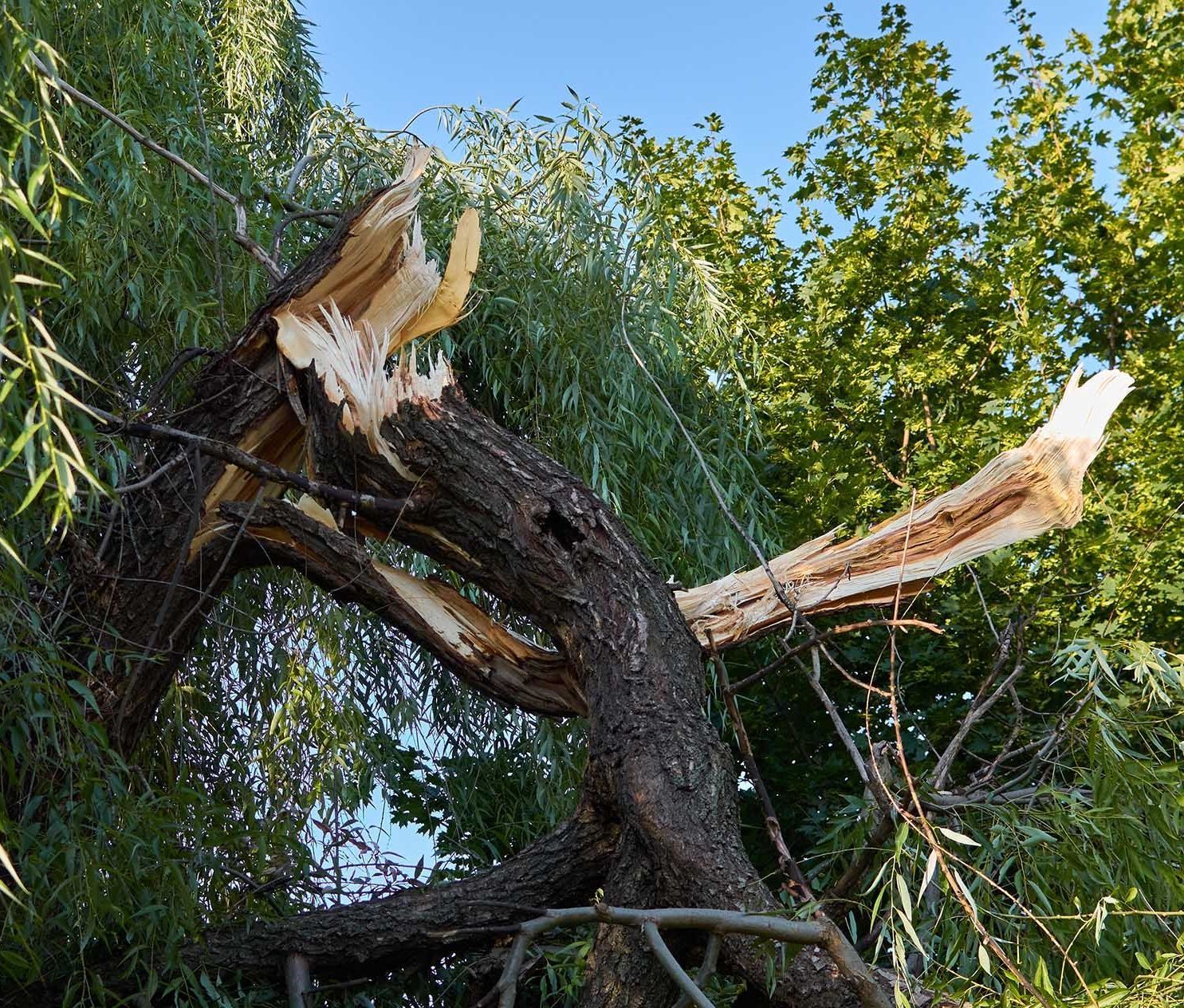
Falling Tree Limbs
Falling tree limbs and leaning trees caused by storm damage can be a serious problem, especially when they are around a residential area. High winds can cause even large, seemingly healthy limbs to break without warning, putting people and structures at risk. Depending on the condition and size of the tree, it's important to start pruning early on to prevent them from becoming a risk to safety. If the tree is leaning over your home, garage, driveway, power lines, or other structures, then it's important to call a certified arborist who can assess the situation and determine if tree removal or trimming is necessary for safety reasons.
5. The tree causes property damage
Power Lines & Infrastructure
Sometimes, no matter how beautiful and healthy a tree is, the location may just be too wrong for it to remain. Trees growing near power lines can cause fire threats and considerable damage — a single lightning strike is enough to bring a tree down onto infrastructure or a structure below. And this applies to both large trees and small trees alike. Trees that are interfering with infrastructure more broadly, such as those whose root systems are damaging foundations, driveways, or underground pipes, may also need to be removed even if the tree itself appears healthy.
Trees Too Close to Your Home
Likewise, trees positioned too close to a home can encourage mould growth on the structure and cause ongoing disturbance to the foundation over time. Whether you are managing a hazardous tree as part of a landscaping project or simply maintaining existing trees on your property, they may not only cause personal injury to people in the area but can cause further property damage if branches fall onto the roof, car, or other structures nearby.
Tree Removal
Whichever the case is, a hazardous tree poses a safety risk and should be addressed without delay. The best way to deal with this kind of situation is to hire a professional tree removal service, as they have the expertise and safety equipment to handle the job. These professionals will inspect the tree and its location, assess possible risks, and then recommend preventive measures or full removal if necessary.
Takeaway
Trees are a vital part of our environment with the numerous benefits they provide. They produce oxygen, provide shade, and can significantly improve the overall aesthetic of a property. However, there are times when trees need to be removed for safety and health reasons.
When to Call a Professional
Some factors to consider include the presence of dead or dying trees, trees affected by disease or infestations, trees with structural issues, those damaged by storms, and trees situated in hazardous locations. If any of these signs are present, you should contact a local arborist and address the issue as soon as possible. By hiring professional tree services, you can be sure that your safety is in good hands and that any potential risks posed by hazardous trees are taken care of without any accidents occurring.
At Bob & Ben The Tree Men, we offer efficient tree removal services to help you deal with any tree-related issues you may be facing. Our team of skilled arborists have the knowledge and experience to handle even the most challenging tree removal jobs in a safe and efficient manner. Using the latest equipment and techniques, we can ensure that the entire process is completed smoothly, without causing any damage to your property or the surrounding area. Get in touch with us today so we can arrange a quote and discuss the best way to begin your tree removal project.
Over 25 years ago, Bob and Ben planted the seeds of what would become one of the most popular and trusted tree service businesses in the Sutherland Shire.
Get your FREE tree lopping quote today!
Let Bob and Ben The Tree Men get to the root of all your tree problems. Contact us today to receive your personalised quote.