

Can a Neighbour Make You Remove a Tree?
Bob and Ben - The Tree Men
Tree disputes rarely start as legal problems. They usually begin with concern about safety, damage, or responsibility. A tree near a boundary might be healthy, stressed, or structurally compromised, and the difference matters more than most neighbours realise. What looks like a nuisance to one person may be a genuine risk to another.
In New South Wales, whether a tree can be forced to be pruned or removed depends heavily on its condition, stability, and likelihood of causing damage. These are not matters of opinion, they are technical assessments. Understanding how tree health, risk, and legal responsibility intersect can help you avoid conflict, protect your property, and make informed decisions before a dispute escalates.
These issues are commonly assessed by experienced arborists, including the team at Bob & Ben The Tree Men, when neighbours raise concerns about tree safety or damage.
Introduction to Tree Ownership
Tree ownership is straightforward in NSW. If a tree grows on your property, you own it. The location of the trunk determines ownership. This rule applies even if branches hang over a neighbour's land.
Ownership brings responsibilities. You must maintain your trees in a safe condition. You're liable if your tree causes damage due to neglect. This applies whether the tree damages your property or your neighbour's property.
Boundary Trees
Sometimes a tree trunk sits exactly on the property line. This creates a boundary tree. Both neighbours own the tree jointly. Neither party can remove or significantly prune a boundary tree without the other's consent.
If you're unsure about a tree's location, check your property survey. A licensed surveyor can confirm the exact boundary line. This prevents disputes about ownership.
Understanding Tree Disputes
Tree disputes arise for many reasons. Common complaints include:
- Overhanging branches blocking light or views
- Roots damaging foundations, driveways, or fences
- Falling leaves clogging gutters
- Branches scraping roofs or windows
- Trees attracting pests or dropping fruit
Not all complaints justify legal action. Normal tree behaviour doesn't count as a nuisance. Trees naturally drop leaves and cast shade. Courts won't order removal for these reasons alone.
When Disputes Become Legal Issues
A neighbour can take legal action if a tree causes substantial harm. In New South Wales, the Trees (Disputes Between Neighbours) Act 2006 sets out the process for resolving disputes involving trees and hedges between adjoining properties.
To succeed, the neighbour must show that the tree causes unreasonable interference with the use and enjoyment of their land, or that it has caused, or is likely to cause, serious damage within the next 12 months. Matters such as blocked views, leaf drop, or shade alone are generally not enough unless linked to actual damage or a significant safety risk.
At this stage, opinions carry little weight. Courts and councils rely on evidence, particularly independent arborist assessments, to determine whether a tree presents a genuine risk or has already caused damage. A professionally prepared arborist report often becomes the foundation of any legal decision.
Serious damage may include:
- Cracking foundations or structural walls
- Lifting concrete driveways or paths
- Breaking retaining walls
- Damaging underground pipes or sewerage systems
- Destroying roofs, gutters, or windows
Can a Neighbour Make You Cut Your Tree Down?
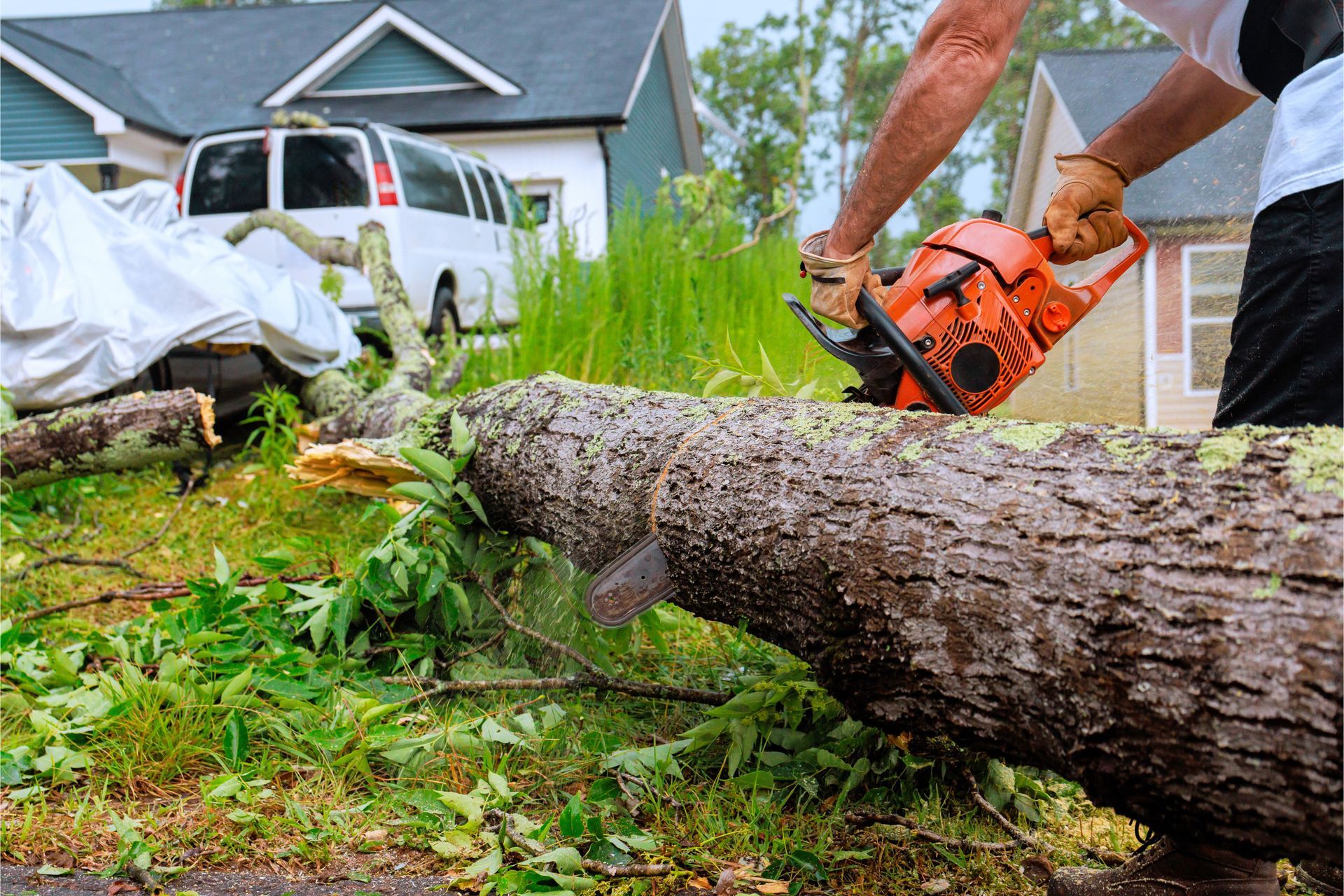
Yes, but only under specific circumstances. A neighbour can force tree removal through legal action if they can prove certain conditions.
Grounds for Forced Removal
A neighbour can apply for a court order to force you to prune or remove a tree if it meets specific damage or danger criteria. They need to demonstrate one of these situations:
Serious Damage: The tree has already caused or is likely to cause serious damage to their property within the next 12 months. Roots damaging pipes, lifting concrete driveways, destroying foundations, or breaking retaining walls may justify removal.
Substantial Interference: The tree substantially interferes with the use and enjoyment of their land. To force removal, a neighbour must show that the tree represents a substantial and unreasonable interference with their land use and enjoyment.
Safety Hazard: A tree may be considered a safety hazard if it is dead, diseased, dying, or structurally unsound. This determination is based on factors such as internal decay, root stability, load distribution, and the likelihood of failure under normal weather conditions.
A court may order the removal of a tree that poses a real risk of serious injury or property damage. Importantly, a tree does not need to have failed already to be considered dangerous. If professional assessment shows a high risk of failure, preventative action may be justified.
This is where expert evaluation becomes critical. Structural weakness is not always visible to an untrained eye, and healthy-looking trees can still pose significant risks.
Noxious Species: If a tree is classified as a noxious weed or invasive species under local council or state legislation, removal may be required. This process is governed by council vegetation controls and biosecurity laws rather than the Trees (Disputes Between Neighbours) Act. Requirements vary between councils, so confirmation should always be obtained before taking action.
What Your Neighbour Must Prove
A neighbour must provide evidence that the tree is responsible for the alleged damage or risk. This often includes photographs, repair reports, and, most importantly, an arborist’s assessment linking the condition of the tree to the damage or hazard claimed.
Casual observations or personal frustration are not enough. Evidence must demonstrate that the tree is the source of the problem and that the interference is substantial and unreasonable.
A neighbour cannot force removal simply to improve a view or increase sunlight. If a tree is healthy and structurally sound, and does not pose a safety risk, courts are unlikely to order its removal.
Protected Trees
If a tree is protected by a council permit, heritage listing, or vegetation protection order, pruning or removal cannot proceed without formal approval. Many local councils require detailed documentation before granting permission, particularly where a tree is mature or significant.
In these cases, councils commonly request professional arborist reports to justify any proposed work. Incorrect pruning or unauthorised removal of a protected tree can result in substantial fines and further legal complications, even if the tree was the subject of a neighbour dispute.
Checking protection status and obtaining expert advice before acting reduces the risk of accidental non-compliance.
Can I Force My Neighbour to Cut Down Their Tree?
You might be able to force your neighbour to remove their tree. Success depends on meeting legal requirements and following proper procedures.
Your Rights as an Affected Neighbour
In 2026, a neighbour's legal rights regarding a tree on your property depend on whether the tree's branches or roots encroach on their land or if the tree poses a significant risk.
A neighbour has a limited common law right to prune overhanging branches or encroaching roots back to the exact property boundary, usually at their own expense. This right applies only where pruning can be carried out without entering the neighbour’s land and without causing damage to the tree.
Importantly, this right does not override local council requirements. Many councils require permits for pruning or removal, even where branches cross a boundary. Always check local regulations before carrying out any work.
Steps to Force Removal
If self-help measures aren't enough, follow these steps:
- Document the Problem: Take photographs showing the damage. Get quotes for repairs. If possible, obtain an arborist's report confirming the tree is causing harm and linking that harm to the tree keeper’s responsibility.
- Talk to Your Neighbour: If your neighbour owns the tree, the first step is to consult the tree keeper directly and ask if they have any objections to removing or pruning the tree. If overhanging branches or encroaching roots have damaged your property, you should write a letter to your neighbour outlining the issue.
- Issue Formal Notice: If a dispute about a tree cannot be resolved informally, a notice for removal of overhanging branches can be issued to the tree keeper. If you cannot resolve the dispute informally, you can issue a notice for removal of the branches or apply to a tribunal for a decision.
- Take Legal Action: A person wishing to have a tree or hedge on the neighbour's land pruned or removed may apply to the Land and Environment Court for orders. If a tree is dangerous or damaging, the neighbour can file a court complaint to seek a removal order.
When You Cannot Force Removal
Normal tree behaviour, such as dropping leaves and casting shade, is generally not considered a nuisance. A tree is owned entirely by you if it is on your land, and the neighbour has no right to demand its removal unless it is a hazard or nuisance.
A reasonable effort to resolve a tree issue directly with a neighbour is usually required before a court will consider a case. Resolving disputes directly with your neighbour is quicker and cheaper than taking legal action.
Whose Responsibility Is It to Cut Overhanging Tree Branches in Australia?
The tree owner is responsible for maintaining their tree. However, you have specific rights regarding branches that cross your boundary.
Your Self-Help Rights
Neighbours do not need permission to prune back to the boundary line but cannot enter your property without consent. In most states, you can prune back the branches of a tree overhanging your property unless the tree is protected or subject to an environmental overlay.
You can trim overhanging branches at your own expense. You must:
- Cut only to the exact property boundary
- Not kill or damage the tree
- Return the cuttings to your neighbour's property
- Not enter your neighbour's land without permission
Cut branches, roots, and fruit technically remain your property after pruning, and the neighbour should return them unless returning them causes damage. You should return any cuttings from your neighbour's tree in a way that doesn't damage their property.
When the Owner Must Act
If overhanging branches are causing damage, the tree owner should address the problem. Branches that are damaging roofs, gutters, or windows may justify removal.
If the owner refuses to act after receiving notice, you can remove the branches yourself. If a neighbour does not respond to a notice for removal of overhanging branches, the affected party may remove the branches themselves and return them to the tree keeper's property.
What to Do If Neighbours Tree Growing Over My Property Near Me?
Dealing with a neighbour's overhanging tree requires a measured approach. Follow these steps for the best outcome.
Step 1: Assess the Situation
Determine if the tree is causing actual damage or just mild annoyance. Trees can cause significant damage to buildings, paving, and fencing. If tree roots are damaging your fence, you may need to either move the fence or remove the tree.
Check if the tree has any protection status. Contact your local council to find out whether the tree falls under local tree protection rules or planning controls that require a permit for removal, even if the tree is dangerous.
Step 2: Talk to Your Neighbour
Start with a friendly conversation. Explain the problem calmly. Your neighbour might not realise the tree is causing issues. Most people want to maintain good relationships with neighbours.
If overhanging branches or encroaching tree roots have damaged your property, you should write a letter to your neighbour outlining the issue. Keep a copy of all correspondence.
Step 3: Get Professional Assessment
A qualified arborist can inspect the tree and assess its health, stability, and risk profile. If a tree is structurally compromised or unsafe, this assessment may prompt council action or support a legal application.
An arborist can:
- Evaluate the tree’s health and structural integrity
- Identify decay, disease, or root instability
- Determine whether the tree poses a safety risk
- Recommend appropriate action
- Provide written reports suitable for councils or courts
Professional assessments often prevent disputes from escalating by replacing speculation with clear, defensible findings.
Step 4: Issue Formal Notice
If informal discussions fail, issue a formal notice. This notice should:
- Describe the problem clearly
- Include evidence of damage
- Request specific action
- Set a reasonable timeframe for response
- Warn of legal action if ignored
Step 5: Consider Legal Options
If your neighbour ignores the notice, you can take legal action. You may need to provide evidence of damage caused by a tree, such as photographs or an arborist's report, if you seek legal action.
Tree Maintenance and Responsibility
As a tree owner, you have ongoing duties. Neglecting these responsibilities can lead to liability.
Your Duties as a Tree Owner
You must:
- Keep trees in a safe condition
- Remove dead or dangerous trees
- Prevent trees from causing damage to neighbouring properties
- Respond to reasonable complaints
- Obtain permits before removing protected trees
Negligence occurs if you know a tree is dangerous and fail to act, potentially making you liable for any damage it causes.
What Counts as Negligence
Courts may find you negligent if:
- You knew or should have known the tree was dangerous
- You failed to maintain the tree properly
- You ignored warnings from neighbours or experts
- The tree caused foreseeable damage
Regular inspections help you avoid liability. Engage a qualified arborist to assess your trees periodically.
Resolving Disputes with Neighbours
Most tree disputes can be resolved without legal action. Consider these approaches first.
Direct Communication
Talk to your neighbour face-to-face. Explain your concerns clearly. Listen to their perspective. You might find common ground.
Written communication creates a record. Send a polite letter outlining the issue. Keep copies of all correspondence.
Offering Solutions
Suggest practical solutions:
- Share the cost of pruning
- Agree on a maintenance schedule
- Compromise on the extent of trimming
- Consider alternative options like relocating fences
Flexibility often leads to better outcomes. Remember, you'll continue living next door to this person.
When to Get Professional Help
If discussions stall or positions harden, professional input can shift the conversation. Independent assessment brings clarity, particularly where safety or damage is disputed.
Engaging a local arborist early allows issues to be addressed before failure occurs or legal thresholds are met. In many cases, early intervention reduces costs, limits liability, and preserves neighbour relationships.
Involving the Local Council
Local councils play an important role in tree disputes. They enforce vegetation protection orders and tree preservation laws.
When to Contact the Council
Contact your local council if:
- The tree might be protected
- The tree poses a safety risk
- Your neighbour won't address a dangerous tree
- You need guidance on local regulations
Local councils have their own procedures for dealing with tree disputes and may require an arborist's report to take action against unsafe trees.
Council Powers and Limitations
Councils can:
- Inspect trees on private property
- Issue notices requiring tree maintenance
- Order removal of dangerous trees
- Enforce vegetation protection orders
- Mediate between neighbours
However, councils generally won't get involved in private disputes unless safety is at risk.
Vegetation Protection Orders
Many areas have vegetation protection orders. These protect significant trees from removal or damage. Before pruning or removing a tree, permission must be obtained from the local council for a permit or development approval.
Breaking these orders can result in substantial fines. Always check protection status before taking action.
Legal Proceedings and the Land and Environment Court
When informal resolution fails, legal action may be necessary. The Land and Environment Court handles tree disputes in NSW.
Applying to Court
A person wishing to have a tree or hedge on the neighbour's land pruned or removed may apply to the Land and Environment Court for orders. If a tree is dangerous or damaging, the neighbour can file a court complaint to seek a removal order.
Your application must include:
- Details of the tree and its location
- Evidence of damage or interference
- Proof of attempts to resolve the dispute
- Supporting documents like arborist reports
- Photographs or other visual evidence
What the Court Considers
The court examines several factors:
- The severity of damage or interference
- The tree's health and significance
- Attempts at informal resolution
- The impact of removal on both parties
- Environmental and community benefits
A court may order the removal of a tree that poses a risk of serious injury to a person or serious damage to land or property.
Possible Court Orders
The court can order:
- Tree removal
- Pruning or trimming
- Root barrier installation
- Ongoing maintenance requirements
- Cost sharing between neighbours
Court Costs
Legal proceedings are expensive. Court costs can run into thousands of dollars. Consider the cost versus the benefit carefully.
Resolving disputes directly with your neighbour is quicker and cheaper than taking legal action. A reasonable effort to resolve a tree issue directly with a neighbour is usually required before a court will consider a case.
Understanding Your Options as a Tree Keeper
If a neighbour has threatened or commenced legal action over your trees, don't panic. You have several options.
Responding to Complaints
Take complaints seriously. Even if you disagree, respond promptly and professionally. Ignoring problems makes legal action more likely.
Get your own arborist's assessment. This provides independent expert opinion about the tree's condition and any risks.
Protecting Significant Trees
If your tree has heritage value or environmental significance, document this. Obtain reports from:
- Qualified arborists
- Environmental consultants
- Heritage advisors
- Local conservation groups
This evidence helps if you need to argue for tree preservation.
Compromise Solutions
Consider alternatives to complete removal:
- Selective pruning to reduce size
- Installing root barriers
- Regular maintenance schedules
- Moving structures like fences
Showing willingness to compromise strengthens your position.
Mediation and Alternative Dispute Resolution
Mediation offers a less confrontational approach to tree disputes. It's worth trying before court action.
How Mediation Works
A trained mediator helps both parties discuss the issue. The mediator doesn't make decisions but facilitates communication. Sessions are confidential and informal.
Benefits of mediation include:
- Lower costs than court
- Faster resolution
- Preserved neighbour relationships
- Creative solutions
- Voluntary participation
Finding a Mediator
Community Justice Centres provide free mediation services in New South Wales. Private mediators are also available for a fee.
Your local council may offer dispute resolution services. Ask about available programs.
When Mediation Fails
If mediation does not resolve the issue, you can still pursue legal action and seek legal advice to understand your options. Attempting mediation shows courts you tried to resolve the matter reasonably.
Next Steps and Conclusion
Tree disputes between neighbours can be stressful. Understanding your rights and responsibilities helps you navigate these situations effectively.
Quick Reference Guide
If you're the tree owner:
- Maintain trees in safe condition
- Respond to reasonable complaints
- Get professional assessments
- Consider compromise solutions
- Obtain permits before removal
If you're affected by a neighbour's tree:
- Document the problem thoroughly
- Talk to your neighbour first
- Issue formal notice if needed
- Get expert reports
- Try mediation before court action
Getting Professional Help
Qualified arborists can:
- Assess tree health and safety
- Provide expert reports for legal purposes
- Recommend appropriate solutions
- Perform necessary tree work
- Help you comply with regulations
Independent legal advice is worthwhile for serious disputes. A solicitor experienced in property law can explain your options.
Final Thoughts
Most neighbour tree disputes are resolved more easily when decisions are based on evidence rather than assumption. Tree condition, structural safety, and risk assessment sit at the centre of nearly every outcome, whether the matter is handled informally, through council involvement, or in court.
Knowing your responsibilities as a tree owner, and acting on professional advice when concerns arise, reduces legal exposure and helps protect both property and people. While legal remedies exist, early assessment by a qualified arborist and clear communication remain the most effective tools for resolving tree disputes without unnecessary conflict.
Over 25 years ago, Bob and Ben planted the seeds of what would become one of the most popular and trusted tree service businesses in the Sutherland Shire.
Get your FREE tree lopping quote today!
Let Bob and Ben The Tree Men get to the root of all your tree problems. Contact us today to receive your personalised quote.